Showing posts with label Failings of the modern world. Show all posts

Thursday, 15 December 2022

Dovercourt - Plum Tree Cottage


Portland Avenue, Dovercourt CO12 3QN


November 2022


Reading through some of my recent blog entries, you may begin to detect a theme: large, corporate hospitality is often of reasonable value and quality in the UK, whereas the old-fashioned, traditional standalone BnB or accommodation business, run perhaps by one individual, is in a sorry state - not necessarily because owners are deliberately trying to rip off travellers, but perhaps also due to a lack of knowledge of how to run a hospitality business.


We often travel to Harwich, and have stayed at Plum Tree Cottage on three occasions in the last three years. Sadly, our experiences have been less good on each return visit.


***


This one was in late November, and it may be that those renting out holiday properties don’t expect to let them out much at that time of year, but we had expected the property to be prepared for us. We were told we could check in from 4pm, so, in driving rain and near darkness we approached a few minutes after that time on the appointed Monday evening. The front door was approached along a narrow path, which, at the time of our visit, was difficult to walk along due to the untidy, indeed overgrown state of the surrounding garden. The grass and weeds in the lawn were at least five inches high, and a sedum had grown over the whole width of the path. 


We had been given the code for the key safe; unfortunately, to use it required enough light to see the numbers. It was a good job my mobile phone was working to provide the necessary illumination while I moved the dials; the whole process was accompanied by a drumming sound, of water dripping out of a gutter onto the lid of the recycling boxes on the other side of the path. 


Once I had the key we entered the property, expecting it to be warm and welcoming. We deposited our suitcase and rucksack in the hall and realised it was neither; cold and dark would be better adjectives. I found a lightswitch so we could at least see a few things around us, before hunting around for an information pack. I could only find a neat handwritten note on the dining room table from the owners saying they hadn’t provided an information pack ‘because of Covid’. They either weren’t aware of the discovery back in early 2021 (https://www.nature.com/articles/d41586-021-00251-4)  that Covid isn’t spread through contact, or, I thought, ’perhaps it's just another excuse to provide a poor service’.


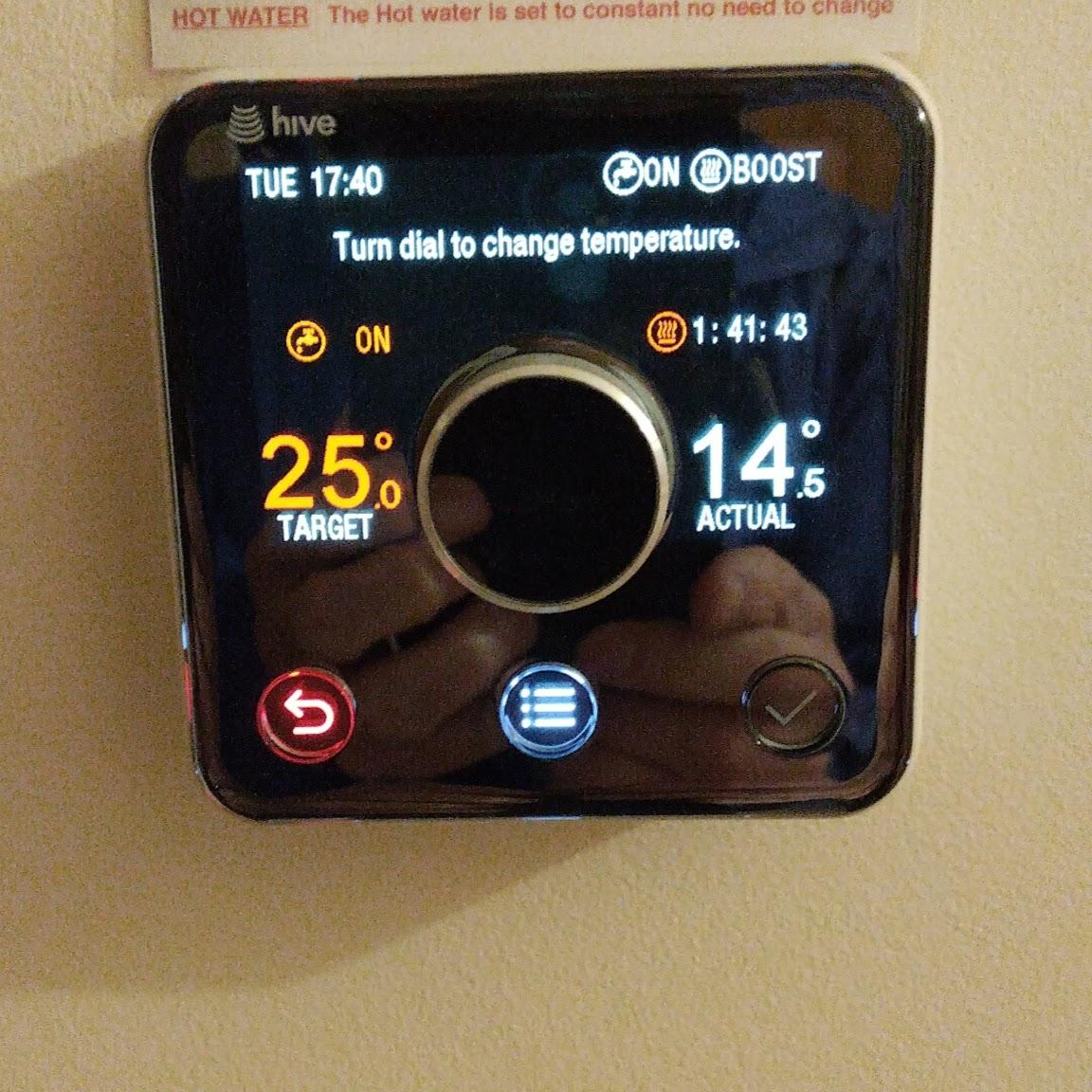
The note explained that the heating would come on at four thirty. ‘A bit late for a horrible winter evening’, I grumbled, before reading further to find ‘you can override it by pressing the override button’. I went to find the controller, through a rather strange pair of narrow, glazed doors to the lounge, pressed the override button, and, expecting to hear the boiler fire up or something,… nothing happened. I looked at the controller more closely: the LCD screen was blank. I walked away, back to the dining room to check the note once more.


Memories of Shanklin, December 2021, sprung to my mind. ‘Surely another property owner hasn’t made the mistake of just assuming their heating worked? Surely they’d tested it recently?’, I wondered. I went back into the lounge and looked around. The boiler was, in fact, a back boiler, behind a gas fire. I checked the gas fire: that seemed to work. ‘We have heat’, I told Viv, ‘even if not everywhere’. I looked again at the controller. It must have dated from the 1980s, it was rather like one I’d had in a property I bought nearly thirty-five years ago. There were no lights on it, just the blank LCD screen. 


The blankness of the screen puzzled me. It should have shown the time, and, perhaps, a flag to say whether the heating or hot water were supposedly on. I looked around more. There were sockets on the skirting board, and an unlabelled isolator switch, in the ‘off’ position. I pondered for a moment. ‘What did that isolator control? Was there anything there other than the heating controller? Had someone switched off the heating controller at the isolator, to save a tiny number of watt-hours and perhaps less than ten pence over a couple of months, and not remembered to switch it back on?’ I flicked the switch, and, hey presto, numerals appeared on the LCD. They should have shown the current time, but didn’t, so I set the time, pressed the override switches, and the sound of something firing up behind the gas fire triggered a smile. ‘We might be in business’, I called to Viv.


I couldn’t find a room thermostat, so I opted to just leave the controller and boiler running, then wait and see what happened. I had spent almost half an hour fiddling around trying to get the heating going; it felt that the property owner, and Hoseasons (through whom we had rented it), had no thought as to the value of my time; it was as if they couldn’t be bothered to check things properly themselves before a rental, they just left it to the customer.


If you rent a car for a few days you expect it to be checked over before you take it over. Shouldn’t that apply to a holiday home too?


***


Heating hopefully working, we looked around a bit more. We checked the lights in every room - kitchen, lounge, dining room and hall downstairs, and bathroom, two bedrooms (although we would only use the master), landing and an office upstairs; most light bulbs were the old fashioned either halogen or fluorescent type, the latter giving poor illumination and taking ages to warm up. (Having just one of these in the centre of the kitchen ceiling seemed crazy, it was a good job there was an illuminated cooker hood there as well.) The cost of the lighting was not really my concern, but I thought that there was a good chance the electricity bill just for our stay would be more than the cost of a few LED bulbs. 


Once the lighting was working we could see the rooms better, and there was plenty so see - that is, if you like cobwebs and dead spiders. One of the latter in the corner of the dining room, and cobwebs on most of the light fittings. I couldn’t believe that the owners, or their cleaners, had decided not to provide tourism and property information in printed form through hygiene concerns, yet hadn’t used a feather duster above shoulder level, clearly for some time. (We had had concerns over cleaning when we visited previously, in 2019 and 2020, but it was never as bad as this.)


Apart from the bathroom and kitchen, the building was floored throughout with laminate flooring, presumably over aged floorboards. This latter observation I drew from the fact that, in one or two places, there was a noticeable movement in the flooring when I stood on it, probably due to very uneven floorboards. 


***


We popped out to the nearby Asda supermarket and stocked up on essentials and something for supper. It wasn’t far, we were back by five thirty and I started in the kitchen. 


The microwave didn’t work; tracking the cable, it became this was due to the socket switch being off. Another sign, perhaps, of obsessive energy saving, and also of no pre-letting checks. I also noticed an oven glove on top of the microwave, possibly blocking the vents. I moved it, for a kitchen problem was the last thing I wanted. 


I then felt the cold again. Viv pointed out an electric heater in the lounge; I moved it into the kitchen, plugged it in and switched it on. ‘I’ll try to remember to switch it off’, I thought, ‘but it's bound to be costing more to run than that radiator (next to it) would, if it was working’. 


***


The heating was now starting to come on. I went from room to room checking the radiators; most were working well, but the one in the kitchen - not a warm room anyway, being in a wing at the rear of the building - was stone cold, and that in the bathroom - above the kitchen - was warm only half way up. ‘Probably needs bleeding’, I thought, ‘but I’m not going to tinker with it. I wonder when the heating was last serviced, whether there is a report on it and whether they have a landlord’s gas certificate?’. These latter documents are one of the things I’d expect to see in an information pack (Visit England used to insist on them for a property to be accredited), but Covid seems to have been an excuse to toss all other aspects of customer safety to the wind.  


***


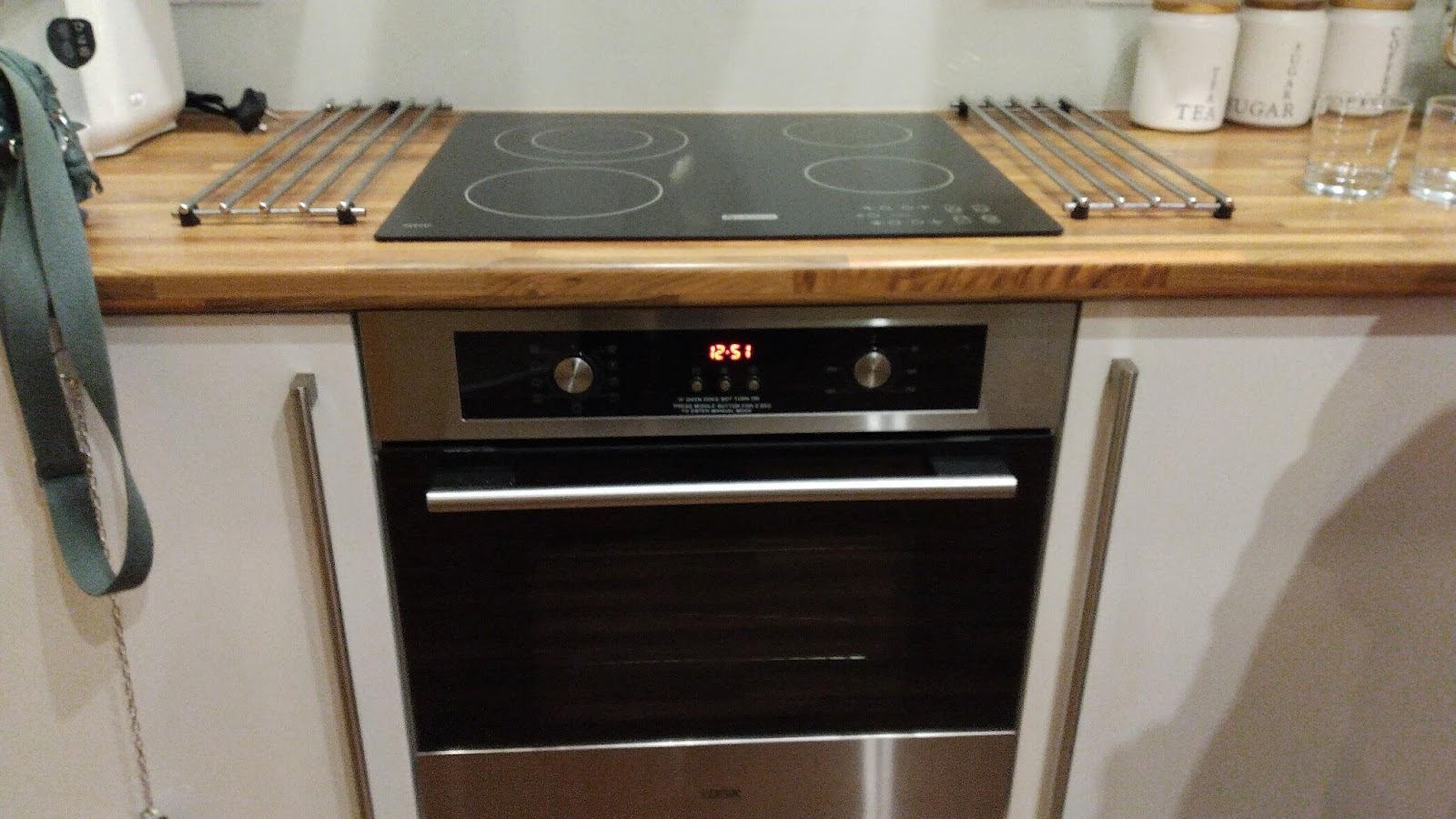
The cooker - an electric ceramic hob type - was surprisingly easy to use, and we enjoyed our meal, before, of course, needing to clear up. I had shut the sliding kitchen door between the kitchen and dining room to keep the latter warm; a mistake, I realised, because the door was a bit ropey and had a tendency to come off its runners. I managed to refix it, an exercise I would repeat several times in our week-long stay, before heading for the sink to attend to the dishes. This gave rise to another problem: detergent was provided, but the only device available to wash up was a very worn sponge, the scourer side looking like it had had plenty of work experience before our visit. I would always expect a new scourer to be provided for this sort of thing, for hygiene reasons if nothing else, so added ‘washing up brush’ and ‘scourers’ to our shopping list for the next day so we might at least be able to ensure the pans would be as clean on our departure as on our arrival. Again, it was strange that they had worried about covid to the point of not providing information, yet left a grotty sponge that might have been used for heaven knows what for us to wash up with.


After clearing up we went through to the lounge, with the idea of watching a bit of television. I turned it on, and on the remote, and the screen came up …. ‘No signal’. ‘Another thing they didn’t check’, I said to Viv. It looked as if the set had been moved a little recently, so I checked the aerial, and sure enough, the lead wasn’t properly connected. I also traced it to the wall socket, where, again, it was hanging somewhat loose. I made the necessary adjustments and we enjoyed a few minutes of ‘Heartbeat’ before I found one of the DVDs we’d taken with us, and we watched that - for regular television has, we often feel, reached saturation point with its ideas.  


***


Later we found the bedroom to be, well, adequate. The bed was generally comfortable, perhaps due to a mattress topper that, I believe, was not there when we last visited the property, just over two years earlier. However, there was a strange combination of mattress protectors that didn’t quite fit the combined mattress and topper, coming adrift in the night and giving a somewhat less than ideal night’s rest. The bedroom itself was poorly ventilated, the secondary glazing preventing any air circulation; I opened it and a fanlight to give us a little fresh air, but, even so, the window was awash with condensation in the morning. 


Storage was rather limited, I opted to keep my clothes in the open suitcase in the adjacent office, and a strange feature of the bedroom - and, I realised, other rooms - was that there were some, what were to me, quite collectible antique items of furniture in them, seemingly being stored, some perhaps prior to restoration work; also, the desk in the office room contained all manner of things, and some drawers were locked. This was certainly different to what had been there previously. I can understand the owner’s desire to use their spare property to store furniture - especially if they are in the trade - but I would have preferred the space to have been used for items we could have used - a proper wardrobe in the bedroom, perhaps (rather than just open hooks). Some of the units contained vases or china, I am not sure what the position would have been if any of this had been accidentally damaged.


***


Our morning routine being to have a cup of tea before we shower, on rising I went downstairs, turned on the electric heater in the kitchen, and got the kettle going. I then found the teapot; inside it looked as if it had been used to boil up tar. 


Fortunately we had a little bicarb of soda with us, which, with a little boiling water and a couple of minutes wearing out the already knackered scourer sponge, soon had the teapot rather more visitor friendly. ‘Another item they should have on their checklist’, I thought. 


We then went upstairs for a shower. The heating had been on for a good hour, and the limited warming effect from the radiator made the bathroom just about bearable, but the shower itself - an over-bath type, driven by an non-thermostatic mixer tap - was feeble at best, producing a trickle of water under which we had to move to get ourselves clean. It didn’t help that the shower head had clearly been damaged, maybe banged against the wall, for streams of water were coming out of the side of it, wholly in the wrong direction. The temperature was just about acceptable, and it was, with care, possible to adjust it to suit our preferences.


We did use a suction-cup grab handle by the shower that we often take away with us; really, there should have been a grab handle for people to use to get in and out of the shower. 


After showering the bathroom window was a fog of condensation. I opened the vent, but it was easy to see how the mould that was all too apparent around the wooden frame of the window had developed - although a bit of cleaning, with a strong bleach solution, would have done wonders. 


***


In the morning we went out to explore Harwich in the full light of day. It also gave us the opportunity to see Plum Tree Cottage properly from the street. It's not unfair to say that it was the untidiest property in the terrace; the garden unkempt, the paint on the wooden window frames was peeling in many places, the frames themselves were clearly in need of some attention, and the main gutter dipping, causing the drumming noise we had heard the night before. 


I moved the recycling bins to save ourselves, and the neighbours, from further disturbance from that overflowing gutter. Having secateurs with me, I also tackled the sedum, and removed a couple of lengths of honeysuckle, just to make access in and out of the property easier. 


***


We did actually enjoy our week in Tendring in November; Dovercourt was a good base for travelling around, we went to Colchester (mostly worth avoiding, apparently it’s the unhappiest place in England and we could easily see why), and Felixstowe (much more recommended) as well as spending time sort out some of my family affairs in and around Harwich. Dovercourt itself is like many old seaside towns, it's not what it was in the days before package holidays (it was a spa resort back in the early 19th century), but some elements of it have picked up in recent years, since Park Holidays took over and have invested significantly in the caravan site on the outskirts of the town. Indeed, those holiday caravans are probably Plum Tree Cottage’s many competitors; we stayed in one in May, and were impressed, and would happily stay there again.


***


Before our departure, Viv and I sat down and contemplated a few points about the property. ‘Why was there so much condensation?’, I pondered. Thinking about it, ventilation was a huge problem. The windows in most rooms were fitted with secondary glazing, sealing them tight. I’d opened the bedroom windows most mornings and the condensation cleared quickly; to me, it seemed that the secondary glazing was a huge mistake, preventing air circulation and allowing build up of condensation - and mould - between the two layers of glazing. Replacement of the windows with UPVC glazing, with trickle vents, might help, but the property being the age it is, and probably not cavity walled, this might cause condensation on the walls, if ventilation is not good.


There also wasn’t an obvious airbrick in the lounge, where there was the - rather old - gas fire and back boiler. Ventilation in any room containing a gas fire has been a legal requirement for many years, that there wasn’t anything obvious (although there was a CO alarm) in the lounge, and no landlord certificate, gave me cause for concern.


There were also no extractor fans in either the bathroom or kitchen; however, each had a source of ventilation - the bathroom a (rather aged) clear circular vent in the window, and the kitchen, a healthy draught around the door. No gas devices being in the kitchen, an airbrick would be of less importance there. 


I also wondered about the internal glazing throughout the property, more or less floor-to-ceiling down the stairs, and in the doors to the lounge, and the inner front door. ‘It looks as though it was done in, maybe, the 1970s’, I commented. ‘The glass has no signs of a kitemark or other identification to confirm it is safety glass’. I’ve worked in glazing, I recall the building regs, and non-safety glass of this size is a no-no in any property nowadays. It would probably be illegal to let it on a long term tenancy, and would be flagged up in even the most basic house buyer survey. I felt somewhat less than reassured that the owners were supposedly taking steps to protect their guests from the rather minor infection of Covid and they hadn’t even - as far as I could tell - applied safety film to this glass to reduce the risk of bleeding to death after a slip on the - rather steep - stairs.


There were few clocks: in fact, the only one was in the kitchen, and it didn’t show the right time - it was about 35 minutes fast. 


Viv had another observation: a lack of bins. There was one in the small, office-type room on the first floor, but that was an open mesh type - not much good for small objects. There were none in either bedroom, the lounge, or the dining room. Admittedly, the more stuff there is in a room the less space there seems to be, but bins are almost an essential.   


Finally, I commented that not only was there no visitor book (there had been one on our first visit, on our second it had been removed ‘because of Covid’; presumably this still applied on this visit), there was also no book, or other means of recording, issues such as the non-working radiator in the kitchen. Having an ‘issue book’, showing problems have been attended to, is one way of showing to guests that you care about them; not having one, nor a visitor book, rather says the opposite. 


***


It would not take much to bring Plum Tree Cottage up to at least a reasonable standard - a bit of effort with a duster, and in the garden, and perhaps removal of the secondary glazing, a bit of decorating and most importantly a decent checklist for the cleaners when preparing it for a let. It’s sad that hosts don’t know about these sorts of things, and I blame the so-called progress of the internet. Unfortunately this is all too typical of some small hotels, BnBs and holiday cottages these days.


Pre-internet, accommodation businesses used to compete with one another to gain quality awards - three stars from the RAC perhaps, or four from Visit England. These would be proudly displayed on signs outside their property, and on all advertising material. The Visit England assessment process will help and guide the less experienced host into providing more what customers will be looking for; there’s no need to go chasing after gold awards or anything, they should just provide the basics, well.


The modern equivalent of this is the online review, which, undertaken often by people who know little about the accommodation business, is next to useless; they’re very censored (to discourage critical comparisons of businesses) and, of course, five-star reviews can easily be bought on the internet; I found one site offering ten for $99. In essence, online reviews are worthless for the buyer of any product or service; ideal for the owners of flats let out on AirBnB perhaps. It's a bit like remembering who an estate agent works for when you’re buying a house: you must realise that the reviewer of a hospitality business often works for the business, promoting their services to you. Also, critical reviews are often blocked; I’ve had several refused by Trip Advisor especially, usually on seemingly spurious grounds of ‘not meeting their standards’.


This has led to a situation where real quality assessment of an accommodation business is quite a rarity, and business owners don’t really understand what their guests want. An element of the paying public must be content to pay for poor quality, but it is surely in everyone’s interest that simple standards - of cleanliness, comfort, and health and safety - are maintained. 


Demand for holiday accommodation may have been high in recent years, but there’s a recession on its way, mortgage rates are on the up, and people will have to be more careful about what they spend. Businesses that don’t meet expectations will be the first ones to suffer. 


There are a few businesses we’ve visited in the last couple of years that need to think about this.

Friday, 18 November 2022

A journey on South Western Railway

November 2022


I travel by train a lot; I’ve given up using a car - too stressful, too expensive. A trip to Dorchester gave me the somewhat dubious opportunity to try South Western Railway, a company that was already making eye-watering losses (£137m was reported in January 2020) before Covid (1). 


+++


I have used SWR and their predecessor, SWT, many times, but this was the first long distance trip since the pandemic. I say long distance - at two and a half hours from Waterloo to Dorchester South it takes longer than London to Leeds on LNER. And that’s what I will benchmark the experience against; and I’m afraid SWR don’t come out very well. For reference, the journeys involved the 11.35 from Waterloo to Weymouth on 10 November, and the 11.13 return on the 11th.


+++


Arriving at Waterloo on foot, we scanned the display boards which showed our train to be leaving from platform 15; a ten coach train, the ‘Front 5 coaches’ were for stations beyond Bournemouth. We negotiated the barriers at that platform, and started to walk along the platform. The carriages were not numbered! Neither was there a sign showing where the ‘front 5 coaches’ began. We walked what seemed like most of the way to Vauxhall and boarded, hoping that a display inside would confirm that the carriage would go to Dorchester. That was a false hope: the display in the carriage wasn’t working. Carriages on LNER trains have letters, and each has a destination on the side by the doors: why don’t SWR ones? 


+++


We selected seats by a table; there weren’t many of these, perhaps four tables in the whole carriage. Table seats are surely needed for long distance journeys; people need to be able to get their food and drink out onto a table to eat it. More table seats would surely make rail travel more enjoyable.  Unfortunately, the seats did not line up with the window, the one ‘back to the engine’ had a pillar in just the place any passenger would want to look to see the scenery. This is a common problem on modern trains; isn’t the opportunity to look out of the window, rather than focussing on the road ahead, a big selling point for rail travel? Strangely, I also noted that while the aisle, and middle, armrests could be raised, the window side one couldn’t be. 


+++


We’d struggled to find anywhere to buy snacks and drinks at Waterloo - Marks and Spencer opposite platform 5 is closed, signs indicate it is due to reopen next year. We found a small shop by platform 1 where we could by a bottle of wine, sandwiches, and water, but the range of options on offer was limited. There was no obvious place to buy tea and coffee (if we could carry it, with our luggage. The reason we had to look around before joining our train was that one thing absent on the train was any form of catering; this, on the one-time route of the Bournemouth Belle. No restaurant car. No buffet. No trolley. No vending machine. Not even a concession for an independent vendor to come on board and sell snacks and drinks over part of the route, a long stop midway for passengers to buy food and drink (as happened before refreshment cars were introduced in Victorian times) or vendors at intermediate stations selling food to passengers through the train windows (as happens in India). (That last one wouldn’t work because the windows don’t open on these trains…). Again, one of the selling points of rail travel is that you can relax at your seat. Travellers will want to eat. They are even encouraged to ‘keep hydrated’ sometimes. How can they do that if they can’t buy a bottle of water? Rail catering is an opportunity to generate additional income for SWR, but it doesn’t seem to care. It doesn’t seem to understand the difference between a suburban hop from Wandsworth Town to Barnes Bridge and a trip half way across England. It's no wonder it is losing money. I don’t know if SWR is used to being compared unfavourably to the Indian railway system, but it shows how far standards have fallen in the UK in recent years.


+++


Our tickets were checked somewhere around Winchester. I had half expected the conductor to confirm we were in the right part of the train for our destination; he didn’t. If I had asked I am sure he would have done. No other ticket checks took place, so a traveller from, say, Brockenhurst (where a significant number of students boarded) to Bournemouth lacking a ticket (or railcard) might not have been given the opportunity to assist with SWR’s finances.  


+++


The computerised indicators in our carriage remained blank until we reached Bournemouth; there were few announcements as to what the next station was. I presume most of the travellers on the route know it so well they do not need reminding where they are, but I can’t help thinking that occasional travellers would have appreciated working displays telling them what train they were on, which carriage they were in, and where the next stop was. 


After Bournemouth the display did come to life, displaying ‘Carriage 3 of 5’, and ‘the next station is Branksome’ - even long after we had passed that station.. It still didn’t tell us what the next station was. Clearly there is a problem, perhaps these displays are exceedingly unmanageable, or maybe the morale of the staff is so low that they can’t be bothered to operate them properly. Other rail companies get these things to work, admittedly with some occasional errors (Thameslink’s have recently started to indicate the train is in the opposite order to that it actually is, for instance, so the number of the carriage you are in is given incorrectly). If they aren’t working, shouldn’t clear announcements be given? Or should SWR perhaps revert to the old way of doing things, of having boards in each carriage, saying where that carriage will be stopping?

+++


The train was running around five minutes late by the time it reached Poole. This matter was unreported and no reason was given. This gives the impression that SWR, and its employees, do not care - and perhaps do not even notice - that their service is failing to keep to schedule. It does not give a good impression of the company, or of rail travel in general. Other companies do make announcements when trains are more than just a couple of minutes late. 


+++


Passing through Poole station, our experience might have been more memorable if we had been able to see the harbour, even if one of us had to lean forward to see around the pillar (previously mentioned). A wall blocked the view of Poole Harbour from the train in the station. Surely railings would have been a better idea here than a wall? Do railway management not understand the appeal of train travel is very much related to the ability to see the countryside through which the train is travelling?


+++


Before we arrived at Dorchester I took our rubbish off to find a bin. I could not find any under any of the seats (where they often are), there was one, poorly marked, in the vestibule at the end of the carriage beside the door. It's no wonder people leave their half-finished drinks on the tables or floors of trains when the presence of bins is so poorly advertised. Wouldn’t it help to have announcements to the tune of ‘when you leave the train can you please take all of your belongings, INCLUDING YOUR RUBBISH, with you ?


+++


I also used the loo on the train. I don’t recommend the experience, and managed to avoid having to on the return journey.The floor was wet, enough said? 


On the journey back I did notice that the door of the loo was stuck open, giving a view to all of its thoroughly unhygienic state. Haven’t SWR thought of fitting devices to the doors, springs basically, that will keep them closed? Sights and experiences like this do not make the occasional traveller warm to the idea of another long journey by train.


+++


For our return journey, we entered the rather cramped station building at Dorchester South - a modern structure that replaced rather nicer, Victorian buildings, when the line was electrified thirty or so years ago. Notable by their absence were printed timetables; the staff at the station have become so fed up with people asking for them that they have printed out the timetable for the line, and leave a copy in a folder on the booking office counter for people to browse or photograph - but not take away. Pocket timetables provide vital publicity for transport services, and are essential for those unable to access the internet. SWR are failing a huge number of people, and it is not surprising they are losing money. 


+++


Once again, the display panels in our carriage were not working properly. Between Dorchester and Southampton they were blank; then they stated ‘The next station is Dorchester South’. After Winchester this changed to ‘The next station is London Waterloo’, despite the train being required to stop at Woking. 


+++


A long journey on South Western Railway is, it seems. an experience to be endured, rather than enjoyed. It is not quite as unpleasant as having a tooth drilled at the dentist, but, if the dentist happened to be attractive, it's not far off.


Overall, I am unsure who is responsible for this situation. It seems that someone in authority (government holds the purse strings for rail companies, and of course they might in turn be dancing to the tune of the likes of the IPCC, the WEF and the CCP) does not believe that travel should be a pleasant experience; that transport is there for those who need it (like students going to college), rather than those who would just like to travel for recreational purposes - such as going to visit relatives. It all seems very totalitarian, but it is sad that we are now in an age where an ordinary person visiting family is something that the powers-that-be do not wish to encourage. 


+++


References


  1. https://www.bbc.co.uk/news/uk-england-51026397


Monday, 31 January 2022

Flat 9, The Adelaide, Shanklin


Shanklin - Flat 9, The Adelaide

15 Esplanade, Shanklin, Isle of Wight PO37 6BN


December 2021


It seems to be a commonly held view now that experience is of little value; young people, those under thirty perhaps, seem to have little appreciation that knowledge is something you accumulate as you go through life: it isn’t programmed into you in your sixteen or so years of formal education, never to be added to. The incorrectness of this modern view has never been more apparent to me than in the past few days, when Viv and I have been staying in this flat, with a good sea view, in Shanklin.


We arrived at 5.20 pm on Tuesday 21st December, to find ourselves within thirty yards of the waves lapping on the beach. We arrived by taxi from Ryde, where, after our hovercraft flight, we had a very good meal at the Ryde Castle Hotel, one of the very few Greene King establishments I hold in high esteem. Normally we would want to arrive at a holiday flat rather earlier in the day, and eat in the locality, but our booking was through Hoseasons, who had advised us:


***** ARRIVAL AND DEPARTURE TIMES HAVE CHANGED TO ALLOW MORE TIME TO PREPARE THE PROPERTY. PLEASE DO NOT ARRIVE AT YOUR PROPERTY BEFORE 5PM AND LEAVE BEFORE 9AM ON YOUR DAY OF DEPARTURE. THIS INFORMATION SUPERSEDES THE CHECK IN/CHECK OUT TIMES BELOW. Thank you *****


We therefore expected the property to be warm and ready for us when we arrived.


It wasn’t; the digital thermostat in the hall read 14.5 Celsius - perhaps not an unusual temperature for an unheated flat in the area around the end of December, but not one that had been ‘prepared’ for us.


Neither, for that matter, did it really seem to have been cleaned thoroughly: surfaces had generally been wiped (with the exception of the table mats, which had clear stains on from previous use, which I removed easily with water and a kitchen towel), the carpet looked generally tired, and, on closer inspection, had definite fluff and dust on it. The extractor fan on the ensuite had enough fluff on it to stuff a small cushion. Perhaps the hoover filters needed changing, but that surely doesn’t excuse visible dirt in the current climate, not when there is so much - possibly irrational - fear of poorly cleaned surfaces.


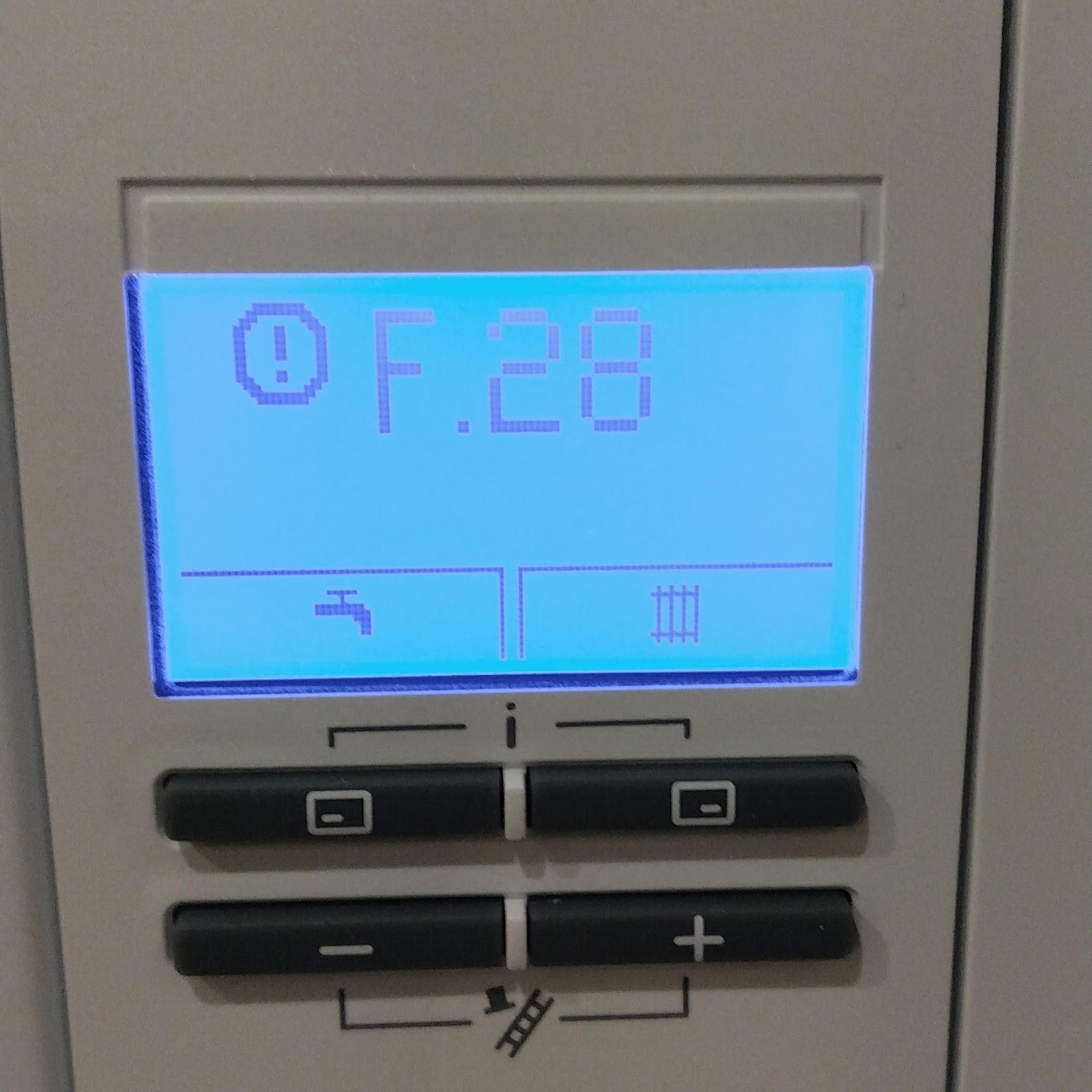
Not only was it clear that there had been no one in in the previous hour or two ‘preparing the property’, but, when I looked into the low temperature I found out the boiler had a fault. I reset it, but it failed again; over the next day or so I became very familiar with Vaillant boiler error codes F28 and F29. After faffing around for two hours I first called the property manager, who did not answer, I then called the Hoseasons helpline and reported the fault; they referred it on to the property manager and owner but we had no help until Wednesday morning. We were on the brink of going home and cancelling our holiday when I accidentally discovered that the hot water was actually working (thanks to an immersion heater I had previously managed to fire into life). I would have noticed this earlier if one of the basins in the flat had not been plumbed in incorrectly (hot is always on the left, cold on the right). Whether most of their customers would have known how to get the immersion heater going might be an interesting question.


The manager did visit the flat, bringing us a ceramic heater, but deferred to the owner to resolve matters. The owner arranged a repairman to visit, on the Thursday morning indeed (which must have involved some string pulling). He ‘freed the condense trap’ which did solve the problem. We had only had to survive with electric fires and Heath-Robinson hot water for a day and a half.


The thing is, Viv and I should never have been in the position we were. Hoseasons had told us the property would be prepared for our visit. It hadn’t been.


Nevertheless, we coped. Others around us - the property manager, the Hoseasons helpline -  were seemingly less able to cope with the situation than us; our experience - of matters plumbing and household - proved useful; the property owner, who had only bought the flat eighteen months previously, and had the boiler fitted just two months before, and the manager were, perhaps, distracted by Christmas. All we wanted to do was to enjoy our holiday.


Their lack of preparedness for our stay was the first of a number of observations we've made about the place that, if it was considered from the viewpoint of a holidaymaker, would have clearly been considered to be a bad move. There are others.


***


The kitchen area at No. 9, The Adelaide features a ceramic induction hob, controlled by touch-sensitive controls. These incorporate a child lock - presumably to prevent children cooking their own supper, for, in this era, allowing that must be tantamount to child cruelty. As anyone who has ever tried to open a container of tablets or laundry capsules knows, a child lock might just deter a few children from using the device, but it also comes very close to wholly preventing a significant proportion of the adult population from being able to use it. The hob was no exception; it took me half an hour to get one of the four rings going; if I tried another the whole thing went off. It was not clear where I had to ‘touch’ or in what sequence; there were vague instructions by the hob, but no manual; I managed to find one on the internet (fortunately the flat has great wi-fi) but that only got me to the ‘one ring’ stage. If we had been desperate for beans on toast when we arrived the beans would have had to be done in the microwave (which worked very well); pasta unfortunately needs to boil, so we had to fight the hob. 


I can just about forgive the current owner of the flat for the hob, she’s only owned the flat for a fairly short while, but I can’t imagine why the previous owner - who also let it out for holiday use - chose such a feature for the kitchen. Anything that is complicated to use is a liability in a holiday let, for visitors will either fight to use it, become disillusioned and decide to go elsewhere next time, or they may somehow use it incorrectly, and break it. There’s nothing wrong with an old-fashioned gas or electric hob, with simple knobs that turn it on and off - and, if necessary, a set of reins to keep the toddler under control.


***


Other devices that visitors may have trouble with in holiday lets include TV’s; I myself have managed, a year or two ago, to mess one up completely trying to retune it after getting a ‘you need to retune your set’ message. The TV in the lounge at Flat 9 uses Freesat, fairly standard perhaps, although the channels have very different sound levels: you need to undertake a complete adjustment of volume settings on two controllers when jumping from channel to channel. There’s a TV in the master bedroom too, that seems to use Freesat but the channel numbers are nonstandard and it’s a nightmare to find the (supposedly) obscure ones, like GB News or Talking Pictures. Young folks may find it easy to master these different technologies but those of us who have got a bit set in our ways get confused by them, and these challenges might be just the sort of thing that would lead us to look for somewhere with predictable TVs, rather than at The Adelaide, next time.


**

I also found a simpler technology failing to meet my expectations at 9 The Adelaide: lightbulbs. A couple of decades ago, before the internet took over, holiday accommodation had to be advertised in published books, or brochures; to avoid liability the publishers would require all listed properties to be accredited with the AA, RAC or VisitBritain. The BnB I was involved with chose Visit Britain, and they required rooms to have a certain wattage of lighting for the business to be accredited; I was surprised at how high it was - off the top of my head, I think a double room had to have 200 watts of light (this was in the days of simple, incandescent bulbs) - that’s perhaps a hundred in the central room pendant, two forties in the bedside lights and a forty tube over the mirror or in a wall lamp.


Many accommodation businesses fail to meet this standard nowadays; they may think they are doing ‘their bit’ to save the planet. Possibly the owners of Flat 9 think that way; more likely, judging by the building, the builders just put in as few lighting points as possible (for they cost money), and past and present owners have just assumed this to be adequate. 


The owners, however, need to put themselves in the place of a visitor trying to find their clothes in the wardrobe in the main bedroom, around 9am, with the curtains open, on a dull, December morning, with the room light on. They then need to consider a visitor in their sixties, perhaps with minor optical issues, undertaking the same task. Then they will see the need for better lighting, in the bedrooms, hall, and lounge (particularly over the dining table). The main bedroom probably has a 75watt equivalent bulb in the main pendant, and 40 equivalent in the bedside lamps - 155 watts in all. A light over the mirror would supplement this nicely, and illuminate the wardrobe. Better lighting in the second bedroom and in the lounge would significantly improve the customer experience.


***


One item a VisitBritain assessor used to expect in a bedroom at an accommodation business for it to be accredited - I think at any level - was a full length mirror. Flat 9 isn’t the only place I’ve stayed recently where there wasn’t one; maybe the younger generation don’t care what they look like when they go out. Don’t they want to check themselves in a mirror before leaving to dine in their best evening dress and high heels - or can they manage to check a full length image of themselves on their phones?


***


I mentioned that the current owner had clearly inherited many flaws in the property when they bought it. I don’t know whether they got a survey done, or whether the original purchaser did, but whoever plumbed in the main bathroom didn’t know what they were doing, and any surveyor would have told them so. As previously mentioned, the hot and cold are the wrong way round on the basin, which is a breach of building regs and a sure sign of an incomptent plumber: if they got that wrong, what else did they cock up? It may appear to be a minor problem but, in a property used as a holiday let, users will become frustrated and, when thinking of where to stay another time, may decide to go somewhere that has proper plumbing. (It is also an important safety issue: the blind know hot is to the left and cold to the right, and risk injury when using incorrectly plumbed in taps).  


Another similar flaw is that there seems to be no window in the property that can be easily opened for ventilation. The main opener in the lounge is an - ill-fitting (so much so that light can be seen around the edges when it is closed) - uPVC door onto the balcony; there is a window, a small, inward opening one, above the kitchen worktops. But shortage of kitchen storage and worktop space mean that sill is in use, leaving the balcony door as the main option for ventilation. In one bedroom is a large tilt-and-turn opener, on tilt leaving a much larger opening than I would want in December; in the other bedroom, the opener is a door for a Juliet balcony - again, hardly what you want for overnight ventilation in the winter. Builders don’t fit more windows than they want to, they cost more than breeze blocks, but, strangely, paying customers may well want them.


***


I mentioned kitchen storage: a bit of a rethink might permit some shelving above some of the worktops, which would have given us somewhere for us to put our non-fridge food items - for which there was only one tiny cupboard available. There is also nowhere to put the roasting trays that are stored normally in the oven when you’re cooking in it; I ended up putting one in the bedroom while our tuna pasta bake cooked in the oven. Another kitchen point relates to the tap: hot and cold positions aren’t obvious, and it is of a shape that does not always make for easy filling of the supplied kettle - the spout of the tap is quite low.  


More in the kitchen: some of the wine glasses provided had very long stems. I’d rather not use them, I fear they would easily topple over. We ended up using the tumblers provided, even for wine. 


***


A point that might upset some is that the flat has no assigned parking space; from May to September, anyone staying there would have to buy a parking permit to park on the Esplanade - assuming they can find a space. In terms of location, there is also no convenience store within easy walking distance - all the shops are up the hill in the town. The location itself, beneath the cliff at Shanklin, may be the cause for the poor mobile phone reception we experienced in parts of the flat.


***


Strangely, even with all these issues, Viv and I coped. Indeed, we enjoyed our stay at Flat 9. Why? Because we understood the limitations, we used our experience and knowledge to cope with them. There are some very positive points about the property. For a start, it’s modern, warm, with reliable water, electricity and wifi. The location is good if it suits you: right opposite the beach, with its restricted sea view, a couple of pubs close by, and great for walks along the bay towards Sandown. The sound of waves on the beach through the open windows at all times of day does compensate for many minor failings.


That doesn’t mean we’d necessarily stay there again however; maybe I’ll ask Hoseasons whether they have any correctly plumbed properties on their website (I bet they can’t tell), or we’ll just choose the Premier Inn, or Ryde Castle Hotel, because they are chain hotels and we know what to expect there. If we stay at The Adelaide again, we shall, at least, know what we might be letting ourselves in for. 


Finally, we won’t book with Hoseasons again. ‘Covid’ has become a byword for shortchanging the customer,  incompetence, and lack of service in supposed service industries. Yes I can clean a shower vent or get an immersion heater working - but why should I have to when I’m supposedly on holiday? So we shan’t be booking anything with Hoseasons until they stop pretending that it's a good thing for the customer that they can’t check in until 5, because they are arranging cleaning that’s so intensive it will need that extra time.   


Premier Inn, Slough Central South

  Slough - Premier Inn, Slough Central South  Windsor Road, Slough, SL1 2EL  April 2023   ‘ Come, friendly bombs, and fall on Slough, It isn...